
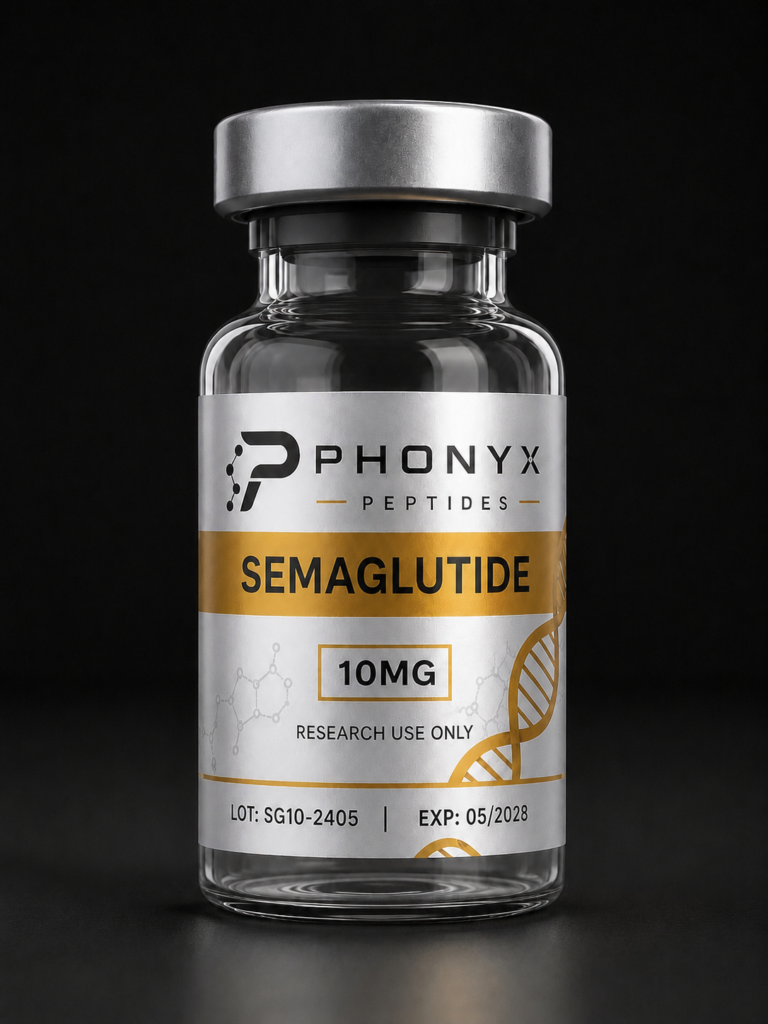
Semaglutide
A long-acting GLP-1 receptor agonist developed to support glucose-dependent metabolic signalling, appetite regulation and sustained once-weekly exposure.
The listed format is the total vial content in the PHONYX research portfolio. It is not a weekly clinical dose.
Interested in this compound?
Contact the PHONYX team for availability and catalogue information.
What is Semaglutide?
Semaglutide is a synthetic analogue of human glucagon-like peptide-1 (GLP-1) with 94% sequence homology to native GLP-1. It is engineered for prolonged activity through strong albumin binding and resistance to enzymatic degradation.
The molecule is approved in regulated medicines for specific indications. PHONYX research vials are for laboratory research only.
Selective GLP-1 receptor agonism
Glucose-dependent signalling
GLP-1 receptor activation enhances insulin secretion when glucose concentrations are elevated and reduces inappropriate glucagon release.
Appetite regulation
Central and peripheral GLP-1 pathways influence satiety, food intake and reward-related responses to food.
Gastric emptying
Semaglutide can slow gastric emptying, particularly during treatment initiation, contributing to post-meal glucose and appetite effects.
Receptor profile
| Compound | GLP-1R | GIPR | GCGR |
|---|---|---|---|
| Semaglutide | ✓ | — | — |
| Tirzepatide | ✓ | ✓ | — |
| Retatrutide | ✓ | ✓ | ✓ |
The SUSTAIN, STEP and SELECT programmes
SUSTAIN Type 2 diabetes programme
The SUSTAIN phase 3 programme evaluated once-weekly subcutaneous semaglutide across monotherapy, combination therapy and active-comparator settings in adults with type 2 diabetes.
STEP Weight-management programme
The STEP programme evaluated semaglutide 2.4 mg once weekly in adults with obesity or overweight, with and without type 2 diabetes, alongside lifestyle intervention.
SELECT Cardiovascular outcomes programme
SELECT studied adults with established cardiovascular disease and overweight or obesity without diabetes, assessing major adverse cardiovascular events during long-term treatment.
Stepwise escalation used in STEP studies
Different semaglutide development programmes used different maintenance doses. The schedule shown reflects the pivotal STEP weight-management programme.
Selected published findings
STEP 1
Mean body-weight change at 68 weeks with semaglutide 2.4 mg versus approximately −2.4% with placebo.
STEP 2
Mean change at 68 weeks in adults with overweight or obesity and type 2 diabetes.
STEP 8
Mean change at 68 weeks with semaglutide 2.4 mg compared with −6.4% for liraglutide 3.0 mg.
SELECT
Relative reduction in major adverse cardiovascular events in the primary published analysis.
Commonly reported adverse events
Nausea, diarrhoea, vomiting, constipation and abdominal discomfort.
Long-acting molecular design
Semaglutide contains structural modifications that increase albumin binding and reduce degradation by dipeptidyl peptidase-4. Its elimination half-life is approximately one week, supporting once-weekly subcutaneous administration in clinical programmes.
PHONYX portfolio format
Evidence behind the key claims
Frequently asked questions
How does semaglutide differ from tirzepatide?
Semaglutide selectively activates GLP-1 receptors, while tirzepatide activates both GIP and GLP-1 receptors.
Is semaglutide approved in regulated medicines?
The molecule is approved in regulated medicines for specific indications. PHONYX research vials are for laboratory research only.
What dose was used in the STEP programme?
The pivotal weight-management programme used gradual escalation to a 2.4 mg once-weekly maintenance dose.
Is the 10 mg vial a clinical weekly dose?
No. It is the total amount of lyophilized compound in the vial and must not be confused with a clinical maintenance dose.
Why are clinical dosing schedules included?
They document published research and are not self-administration instructions.
Research Disclaimer
This PHONYX product is presented exclusively for laboratory and scientific research. It is not a branded medicinal product and is not intended for human consumption, self-administration, diagnosis, treatment, cure or prevention of disease. Clinical-study and regulatory information is provided only for documentary and educational context and must not be interpreted as medical advice, a dosing recommendation or instructions for use.
