
Retatrutide

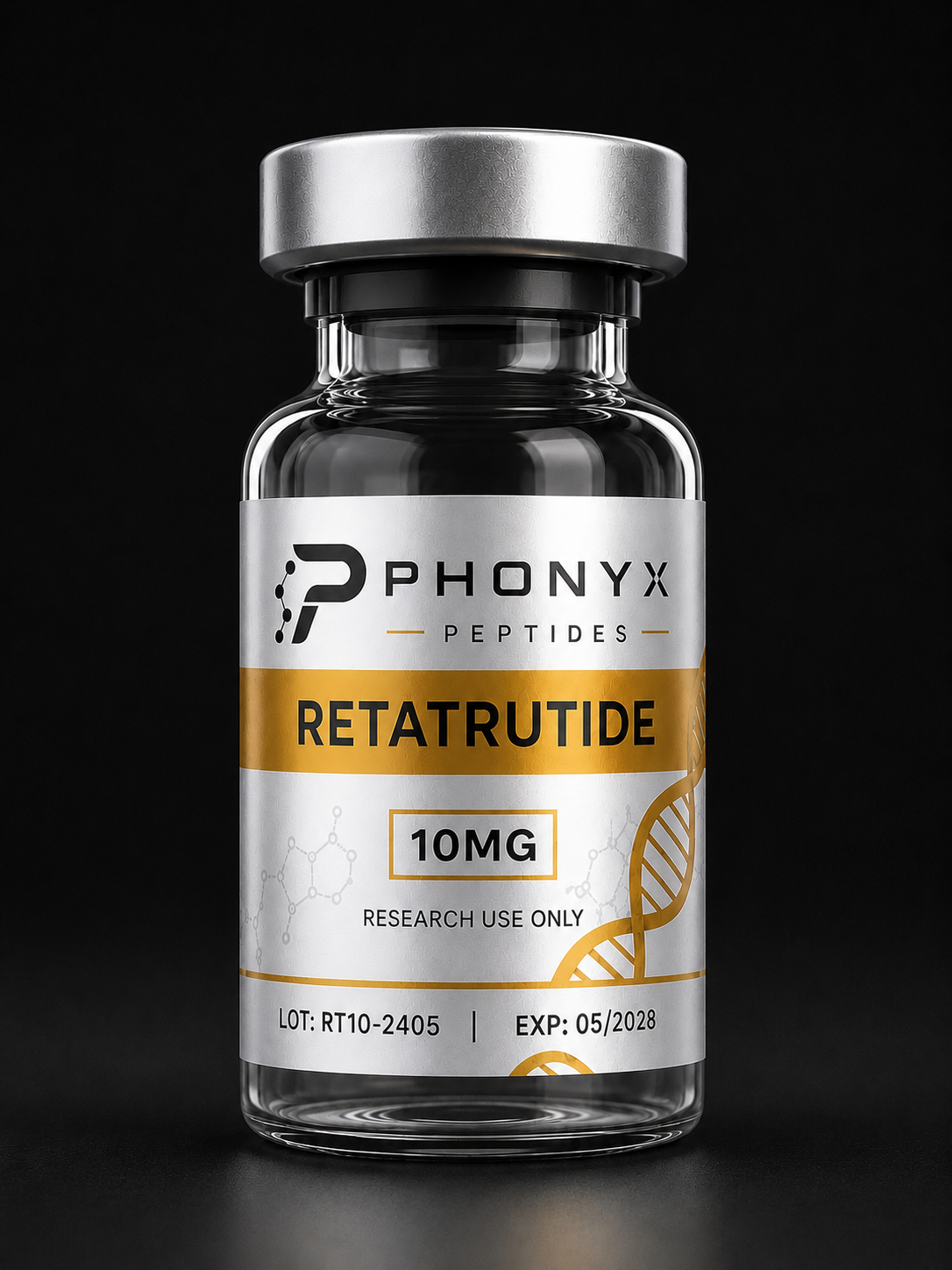
Retatrutide 10 mg research vial
PHONYX SCIENTIFIC COMPOUND REVIEW

Retatrutide

An investigational, once-weekly triple receptor agonist engineered to activate GIP, GLP-1 and glucagon receptors within a single peptide molecule.

Purity ≥99%Lyophilized powderInvestigational compound

Choose a strength. The vial image, price and stock status update automatically.

SELECT STRENGTH

Retatrutide

View Cart
Original price was: 120,00 €.Current price is: 96,00 €.
In stock

For laboratory research only. Not for human consumption.

Interested in this compound?

Contact the Phonyx team for availability and catalogue information.

What is Retatrutide?

Retatrutide, also known by the development code LY3437943, is a long-acting peptide designed to combine agonist activity at three metabolically relevant receptors: the glucose-dependent insulinotropic polypeptide receptor (GIPR), the glucagon-like peptide-1 receptor (GLP-1R) and the glucagon receptor (GCGR).

The scientific rationale is broader than appetite modulation alone. GLP-1 and GIP receptor signalling can influence satiety, food intake, insulin secretion and glycaemic regulation, while glucagon receptor activity is being investigated for its potential contribution to energy expenditure and lipid metabolism. Retatrutide therefore represents a multi-pathway approach to metabolic research rather than a conventional single-receptor incretin strategy.

3receptor targets
weekly in trials
338phase 2 participants
48phase 2 weeks

A coordinated triple-agonist design

GLP-1 receptor

GLP-1 receptor activation is associated with increased satiety, reduced energy intake, glucose-dependent insulin secretion and delayed gastric emptying. It provides the established incretin foundation of the molecule.

GIP receptor

GIP receptor agonism may complement GLP-1 signalling through effects on insulin secretion, nutrient handling and adipose-tissue biology. Its contribution is evaluated as part of the combined receptor profile.

Glucagon receptor

Glucagon receptor activation is being studied for its capacity to increase energy expenditure and influence hepatic lipid metabolism, potentially extending the effect beyond appetite suppression.

How the receptor profile differs

CompoundGLP-1RGIPRGCGR
Semaglutide
Tirzepatide
Retatrutide

From proof of concept to the TRIUMPH programme

Phase 1 First-in-human and early multiple-dose studies

The initial clinical programme evaluated LY3437943 in early-phase studies designed to characterise safety, tolerability, pharmacokinetics and pharmacodynamic effects. The first-in-human single-ascending-dose work supported a prolonged exposure profile compatible with weekly administration. A subsequent early-phase multiple-dose study in people with type 2 diabetes investigated stepwise dose escalation and reported dose-dependent reductions in glucose and body weight.

These studies did not carry a public brand name comparable with TRIUMPH. They are generally identified by the development code LY3437943, their study protocol and their publication titles.

Phase 2 Obesity trial — NCT04881760

The pivotal phase 2 obesity study was a randomised, double-blind, placebo-controlled trial involving 338 adults with obesity or overweight plus at least one weight-related condition. Participants were assigned to placebo or once-weekly retatrutide target doses of 1 mg, 4 mg, 8 mg or 12 mg for 48 weeks. Several higher-dose groups used lower starting doses and gradual escalation.

At 48 weeks, mean body-weight change was approximately −8.7% with 1 mg, −17.1% with combined 4 mg groups, −22.8% with combined 8 mg groups and −24.2% with 12 mg, compared with −2.1% with placebo. The trial established a clear dose-response signal and provided the basis for phase 3 development.

Phase 3 TRIUMPH clinical programme

TRIUMPH is the phase 3 development programme evaluating retatrutide across obesity and related cardiometabolic conditions. The programme includes general obesity populations as well as dedicated cohorts involving type 2 diabetes, cardiovascular disease, knee osteoarthritis, obstructive sleep apnoea and longer-term cardiovascular and renal outcomes.

TRIUMPH-1Obesity or overweight without type 2 diabetes; pivotal 80-week programme.
TRIUMPH-2Obesity or overweight with type 2 diabetes.
TRIUMPH-3Severe obesity with established cardiovascular disease.
TRIUMPH-4Obesity or overweight with knee osteoarthritis.
TRIUMPH-5Head-to-head phase 3 comparison with tirzepatide.
TRIUMPH-OUTCOMESLong-term cardiovascular and kidney outcomes study.

As of 2026, retatrutide remains investigational and is not approved for public use. Published journal articles and regulatory review will remain the appropriate sources for final interpretation of phase 3 findings.

Study regimens and dose escalation

Scientific context: The schedules below describe regimens evaluated under controlled clinical-trial protocols. They are not prescribing instructions, a self-administration guide or a recommendation for use.

Phase 2 obesity study arms

Target doseStarting strategy used in the studyFrequencyTreatment period
1 mg1 mg from initiationOnce weekly48 weeks
4 mgEither 2 mg lead-in or direct 4 mg armOnce weekly48 weeks
8 mg2 mg or 4 mg starting dose with escalationOnce weekly48 weeks
12 mg2 mg starting dose with stepwise escalationOnce weekly48 weeks

Illustrative escalation pattern used for higher target doses

Weeks 1–42 mg weekly
Weeks 5–84 mg weekly
Weeks 9–128 mg weekly
Week 13 onward12 mg weekly in the highest-dose arm

Dose escalation was incorporated into higher-dose study arms to improve tolerability, particularly during the early treatment period when gastrointestinal adverse events were most frequently reported.

What the published studies reported

−24.2%

Mean weight change

Observed at 48 weeks in the 12 mg phase 2 group, compared with −2.1% in the placebo group.

−22.8%

8 mg groups

Mean change at 48 weeks across the combined 8 mg study groups.

−17.1%

4 mg groups

Mean change at 48 weeks across the combined 4 mg study groups.

28.3%

TRIUMPH-1 topline result

Lilly reported this mean reduction at 80 weeks for the 12 mg estimand in its 2026 phase 3 topline announcement. Full peer-reviewed interpretation remains important.

Beyond total body-weight change, the clinical programme has examined waist circumference, cardiometabolic markers, glycaemic outcomes, liver fat, osteoarthritis symptoms, sleep-apnoea severity and cardiovascular or renal outcomes. The strength of evidence differs by endpoint: phase 2 obesity data are peer reviewed, whereas some phase 3 findings were initially released as sponsor-reported topline results.

Commonly reported adverse events

Nausea, diarrhoea, vomiting, constipation and reduced appetite.

Long-acting peptide engineering

Retatrutide is a synthetic peptide linked to a fatty diacid moiety. This design promotes albumin binding and extends systemic exposure. Early clinical studies reported pharmacokinetic properties compatible with once-weekly dosing, while the single-dose first-in-human investigation observed body-weight effects that persisted for several weeks after administration.

Development codeLY3437943
ModalityTriple receptor agonist peptide
Studied routeSubcutaneous
Studied frequencyOnce weekly

Phonyx portfolio formats

CompoundRetatrutide
Available formats10 mg / 20 mg / 30 mg
FormLyophilized powder
Purity≥99%
CategoryMetabolic research compound
Storage before reconstitutionCool, dry and protected from light

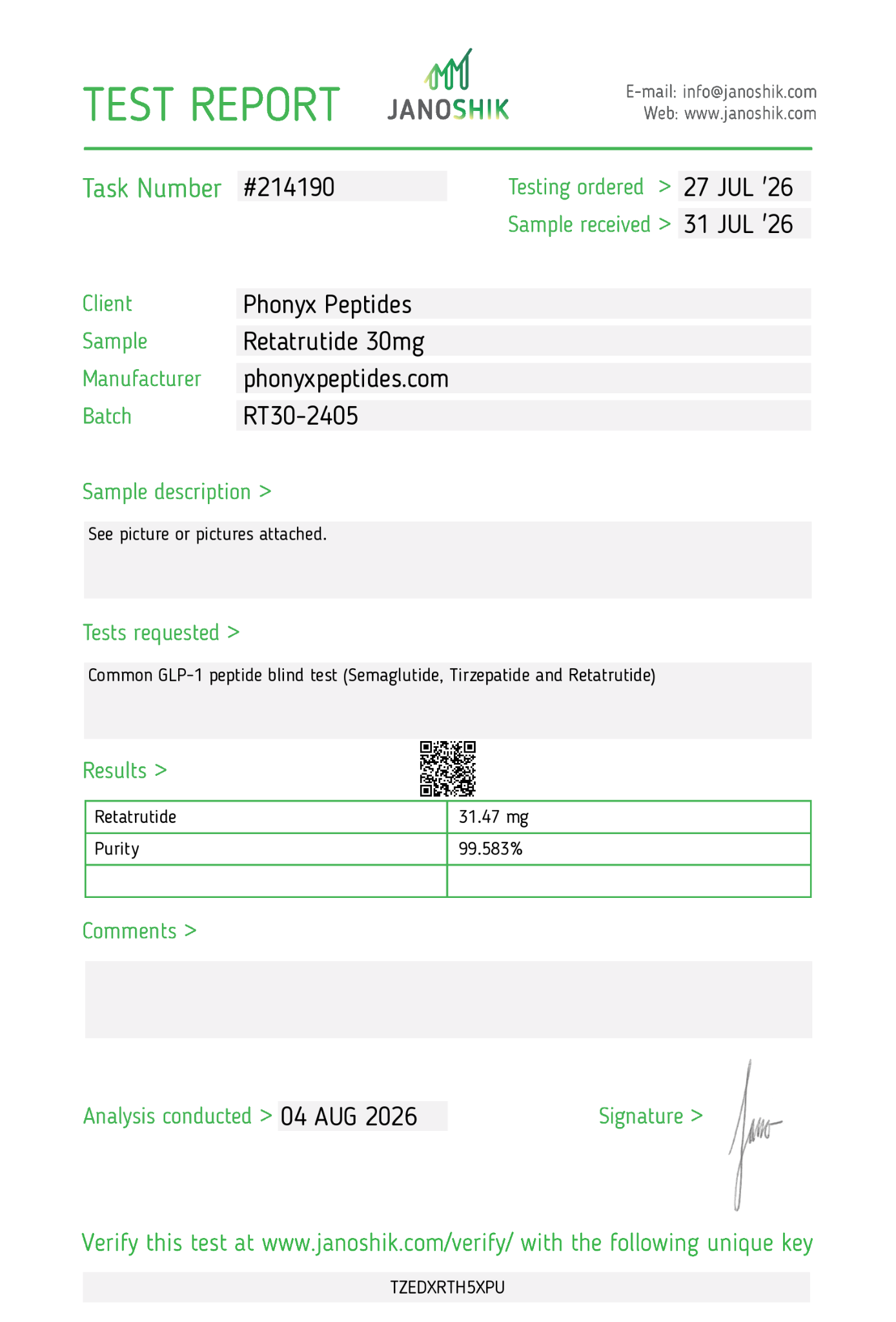
Evidence behind the key claims

Frequently asked questions

Is retatrutide an approved medicine?

No. Retatrutide remains an investigational compound and is not approved for public use as of 2026.

Why is it described as a triple agonist?

Because one peptide molecule activates the GIP, GLP-1 and glucagon receptors.

What doses were evaluated in the phase 2 obesity trial?

Target doses of 1 mg, 4 mg, 8 mg and 12 mg administered once weekly were studied, with escalation strategies used in several higher-dose groups.

Are the 20 mg and 30 mg formats clinical doses?

No. They are total vial contents planned for the Phonyx research catalogue and should not be confused with the weekly target doses used in clinical trials.

What is the TRIUMPH programme?

TRIUMPH is Lilly's phase 3 clinical development programme for retatrutide across obesity and associated cardiometabolic conditions.

Why are clinical-trial dosing schedules shown here?

They are included to document the design of published research. They are not instructions for self-administration or medical advice.

Research Disclaimer

This compound is presented exclusively for laboratory and scientific research. It is not intended for human consumption, self-administration, diagnostic use, treatment, cure or prevention of disease. Information describing clinical studies is provided for documentary and educational context only and must not be interpreted as medical advice, a dosing recommendation or instructions for use. Retatrutide remains investigational and has not been approved for public use.