
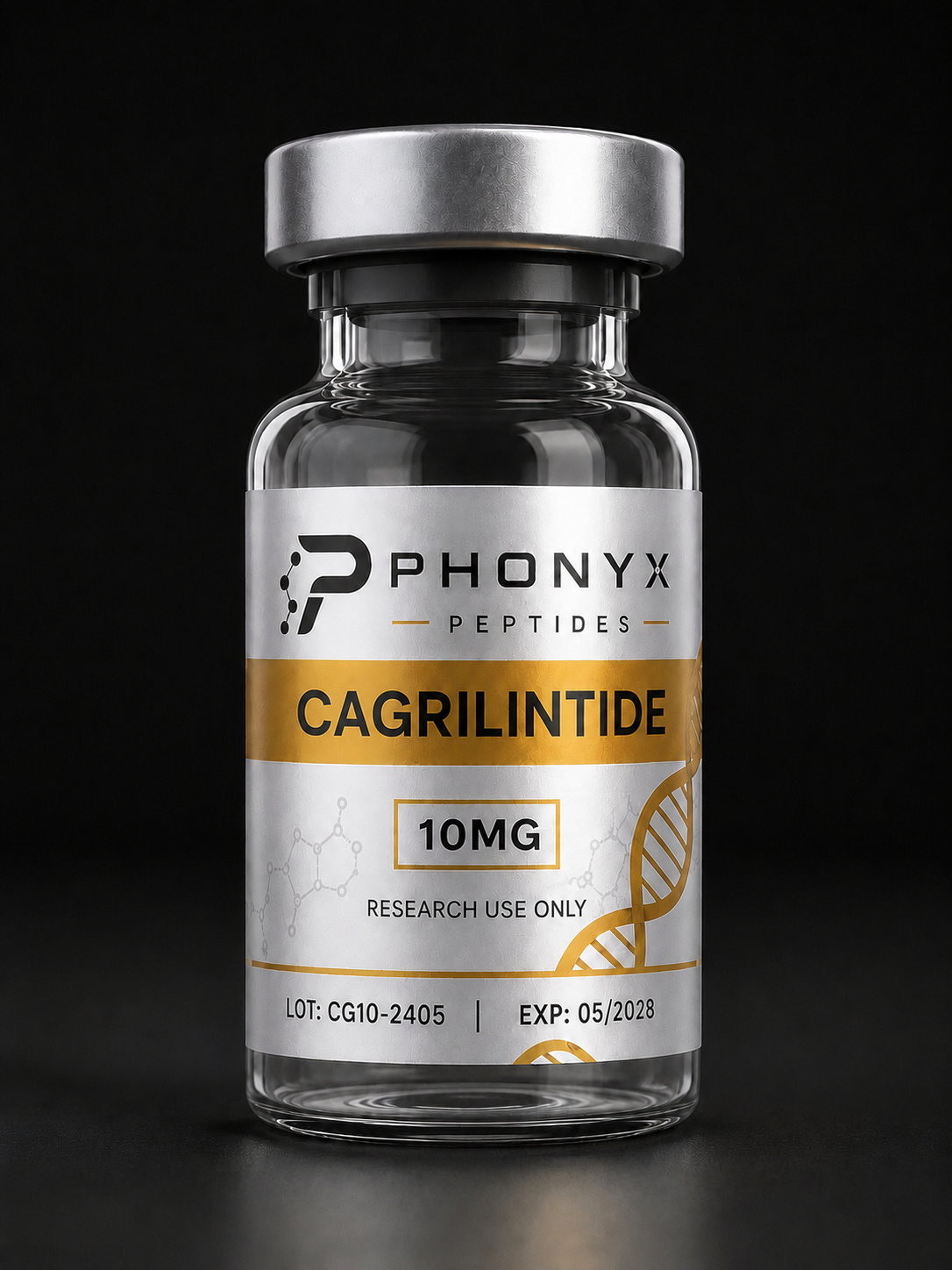
Cagrilintide
A long-acting amylin analogue developed to investigate appetite regulation, satiety signalling and sustained once-weekly metabolic exposure.
The listed format is the total vial content in the PHONYX research portfolio. It is not a weekly clinical dose.
Interested in this compound?
Contact the PHONYX team for availability and catalogue information.
What is Cagrilintide?
Cagrilintide is a long-acting analogue of the pancreatic peptide hormone amylin. Native amylin is co-secreted with insulin after food intake and participates in satiety, meal-size regulation, gastric emptying and postprandial glucagon control.
The molecule has been investigated as a standalone compound and in combination with semaglutide. The combined development programme is commonly known as CagriSema and explores complementary amylin and GLP-1 receptor pathways.
Long-acting amylin receptor agonism
Satiety signalling
Amylin-receptor signalling in the hindbrain and related appetite networks contributes to earlier satiation and reduced meal size.
Gastric emptying
Amylin activity can slow gastric emptying and thereby influence post-meal nutrient delivery and glucose excursions.
Glucagon control
Postprandial glucagon suppression is one of the physiological actions associated with amylin signalling.
Complementary metabolic pathways
| Compound | Amylin receptors | GLP-1R | GIPR |
|---|---|---|---|
| Cagrilintide | ✓ | — | — |
| Semaglutide | — | ✓ | — |
| Tirzepatide | — | ✓ | ✓ |
Standalone and combination programmes
Phase 1 Early dose-escalation studies
Early studies evaluated safety, tolerability, pharmacokinetics and appetite-related effects across escalating weekly doses.
Phase 2 Weight-management research
Phase 2 research investigated cagrilintide alone and in combination with semaglutide, assessing body weight, appetite and cardiometabolic outcomes.
REDEFINE Phase 3 development
The REDEFINE programme evaluates the fixed-dose CagriSema combination and its individual components in larger populations with obesity or overweight and associated metabolic conditions.
Selected research findings
Standalone phase 2
Mean body-weight change reported at 26 weeks with the 4.5 mg cagrilintide group in a dose-ranging obesity study.
CagriSema phase 1b
Mean body-weight change reported at 20 weeks in the cagrilintide plus semaglutide 2.4 mg combination group.
Appetite-related effects
Research has reported reduced hunger, increased fullness and lower energy intake across amylin-based study programmes.
Combination rationale
Amylin and GLP-1 pathways are studied together because they regulate food intake through complementary mechanisms.
Commonly reported adverse events
Nausea, vomiting, constipation, diarrhoea, decreased appetite and injection-site reactions.
Engineered for prolonged exposure
Cagrilintide incorporates structural modifications that increase stability and extend systemic exposure compared with native amylin. Its pharmacokinetic profile supports once-weekly administration in clinical programmes.
PHONYX portfolio format
Evidence behind the key claims
Frequently asked questions
What is cagrilintide?
Cagrilintide is a long-acting analogue of the hormone amylin developed for appetite, body-weight and metabolic research.
How does cagrilintide differ from semaglutide?
Cagrilintide acts primarily through amylin receptors, while semaglutide selectively activates GLP-1 receptors.
Why is it studied with semaglutide?
The two compounds influence appetite through complementary signalling pathways, providing the rationale for the CagriSema combination programme.
What target dose was studied?
Several studies used gradual escalation toward a 2.4 mg once-weekly target dose, while earlier dose-ranging research also evaluated other dose levels.
Is the 10 mg vial a weekly clinical dose?
No. It is the total amount of lyophilized compound in the vial and must not be confused with a studied weekly dose.
Why are clinical dosing schedules included?
They document published research and are not self-administration instructions.
Research Disclaimer
This PHONYX product is presented exclusively for laboratory and scientific research. It is not intended for human consumption, self-administration, diagnosis, treatment, cure or prevention of disease. Clinical-study information is provided only for documentary and educational context and must not be interpreted as medical advice, a dosing recommendation or instructions for use.